Personal Emergency Devices for Home Health and Hospice Patients
Most families caring for someone at home share one fear above everything else. Not the big, looming fear of loss, though that's there too. The specific, practical fear of something happening when no one is around to help.
That worry is real, and it is worth taking seriously. Not by moving someone out of the home they love before they're ready, but by making that home safer in a way that gives everyone, the patient and the family, a genuine reason to breathe a little easier.
Personal emergency response devices exist for exactly this. And the technology has come a long way from the old push-button pendants people used to joke about. What's available now is small, capable, and works whether your loved one is in the living room or out on a walk.
Who these devices are for
If your loved one is receiving home health care and living largely on their own, the risk of a fall or a sudden medical event without anyone nearby is real. Falls are one of the leading causes of serious injury in older adults, and the outcomes are significantly worse when there is a long delay before help arrives. A personal emergency device closes that gap. It means that whether your loved one presses a button or the device detects a fall on its own, help is on the way fast, regardless of where they are in the house or whether they were able to call out.
If your loved one is in home hospice, the picture is a little different but the need is just as real. Hospice patients are often more fragile and more prone to sudden changes. A caregiver who needs to step out, even briefly, carries the weight of knowing something could happen while they're gone. A device that detects falls, tracks location, and connects immediately to emergency services can make those necessary moments away feel less like a gamble.
In both situations, what the device really provides is not just safety. It is the ability to keep living at home, which for most patients is where they most want to be.
Introducing Brighton Emergency Response Devices
We recently began carrying Brighton Emergency Response Devices at Coastal Medical Supplies, and we want our home health and hospice families to know they're available. Brighton offers two options depending on your loved one's needs and preferences.
The Gemini pendant is small and light, worn around the neck, and built for someone who wants simple, reliable protection without anything complicated to manage. It detects falls automatically, has GPS location so help can find your loved one wherever they are, and is waterproof and dustproof for use in the shower or outside. The battery lasts up to five days, and it charges in a single cradle. For patients who aren't comfortable with technology or who simply want something they can put on and forget about, this is the right choice.
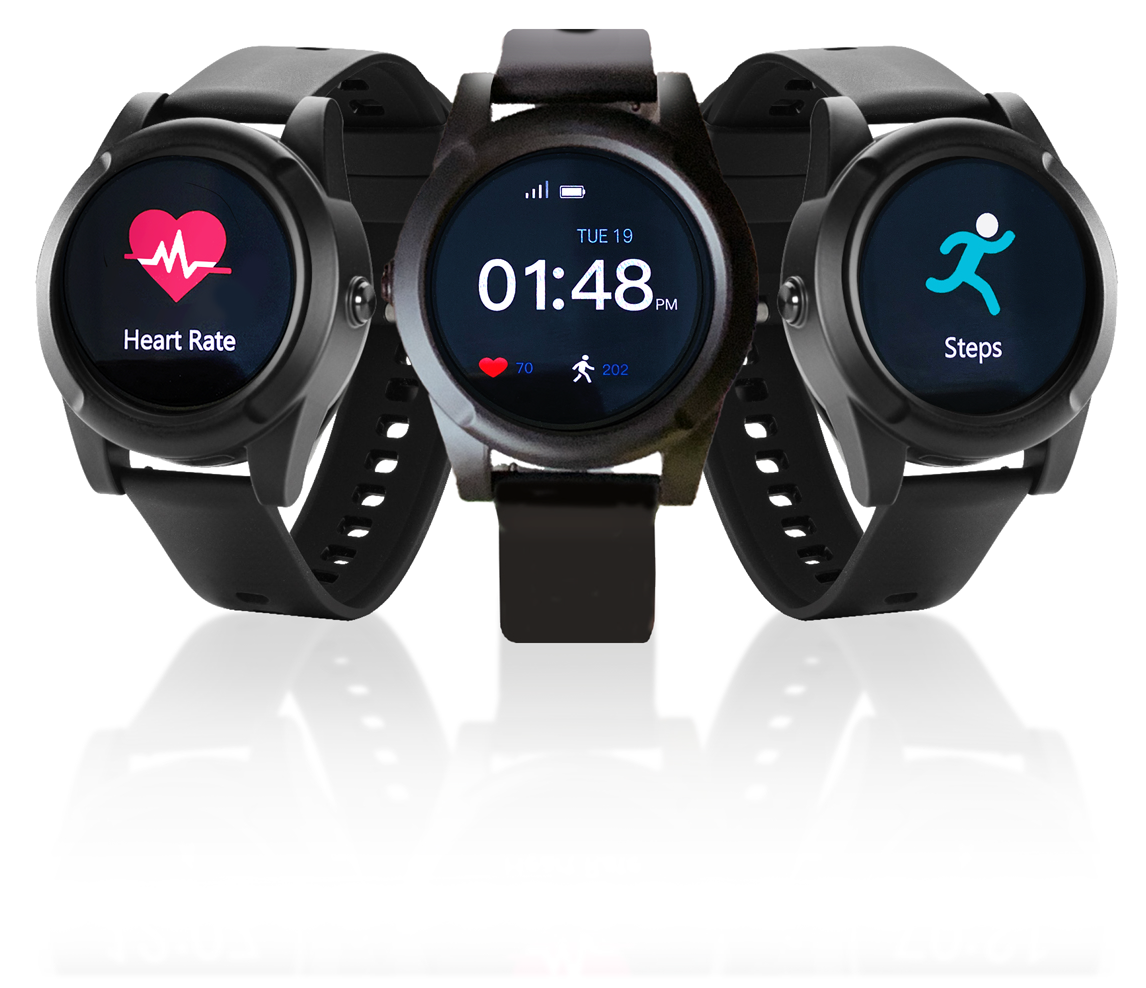
The Stride smartwatch is for the person who wants protection that doesn't look or feel clinical. It works as a real watch, tracks heart rate and daily steps, and has the same fall detection and emergency response built in. One press of the SOS button connects directly to emergency services. It runs on AT&T and Verizon networks and has solid all-day battery life. For a home health patient who is still active and independent but wants a safety net, the Stride fits naturally into daily life without feeling like a medical device.
Both devices require a monthly monitoring service, with no long-term contract, so families aren't locked into anything.
What this changes for caregivers
The families we work with carry a lot. The adult child who lives forty minutes away and wonders every time the phone rings whether this is the call. The spouse who has been up twice in the night and needs to sleep but can't fully let go. The caregiver who needs to run to the pharmacy for an hour and comes home fast every time.
A device that is always on, always detecting, and always connected to help doesn't eliminate that worry entirely. But it changes its quality. Instead of your loved one being completely on their own the moment you step out, they have something in their corner. Something that doesn't sleep, doesn't get distracted, and doesn't need to be asked for help before it acts.
For many families, this extra protection and peace of mind is the difference between their loved one staying home and having to make a harder call much sooner than anyone wanted.
What this changes for patients
Most people want to stay in their home. It is where they feel like themselves, where their things are, where life has the texture and rhythm they know. Giving up that home, or having it given up for them because the family is too worried, is one of the losses people dread most.
A personal emergency device gives patients something back in that equation. A real argument for staying where they want to be. Evidence that the safety concern, the one their family keeps raising, has been addressed in a concrete way. That conversation changes when there is an answer on the table.
For many patients, wearing a device also restores a quiet sense of confidence. Knowing that help is available if something goes wrong makes it easier to move through the day without fear. That ease is worth something. It is part of what makes staying home feel possible rather than precarious.
How to get one
Call Coastal Medical Supplies at 541-254-8177. Our team can walk you through which device fits your loved one's situation and what the monitoring service involves.
Staying home should feel safe. We want to help make it that way.