February Bird Watching for Homebound Patients
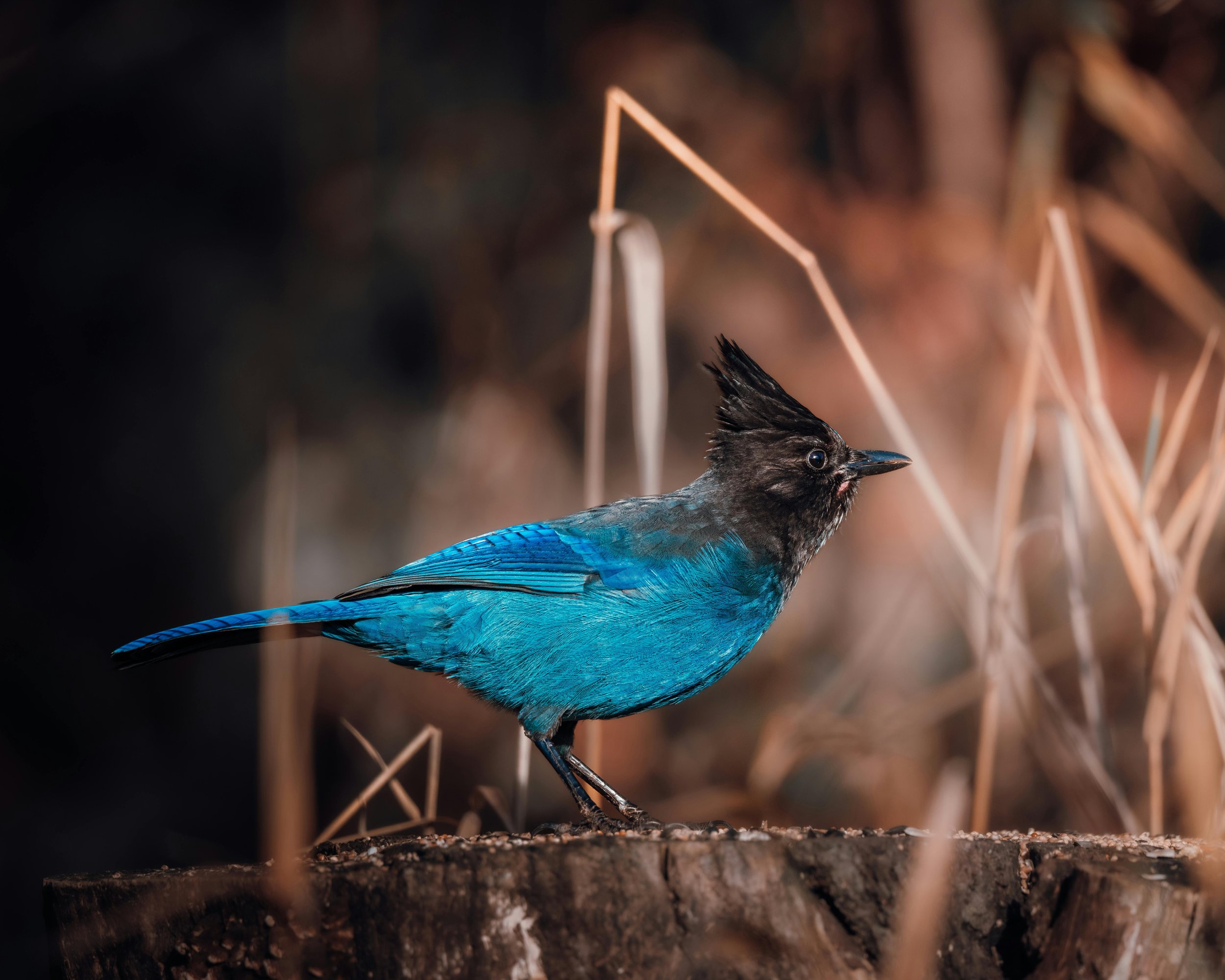
Steller's Jay on a branch.
February along the Southern Oregon coast brings rain, gray skies, and surprisingly active bird life. While you might spend most of your time indoors, the birds outside your window provide daily entertainment and connection to the natural world.
Bird watching requires almost no energy. You can do it from bed or your favorite chair. You don't need expensive equipment or special knowledge. Just a window, some patience, and maybe a simple feeder to attract more visitors.
The birds don't care that you're homebound. They show up regardless, going about their lives right outside your glass. Watching them creates a gentle rhythm to your days and gives you something to look forward to each morning.
Why Bird Watching Works for Hospice Patients
Birds move. Their activity draws your eye and holds your attention without demanding much from you. You can watch for five minutes or five hours. You can drift in and out of sleep and pick up the show whenever you wake.
The repetition soothes. The same species return to your feeder at roughly the same times each day. This predictability provides comfort when so much else feels uncertain.
Bird watching gets you looking outward instead of inward. Chronic illness turns your focus to your body and its problems. Birds pull your attention beyond yourself to something beautiful and alive.
Many people find that birds spark curiosity. You start wondering what species you're seeing. You want to know where they go at night. You notice patterns in their behavior. This gentle mental engagement feels good when so much of hospice care is passive.
Setting Up a Simple Window Feeder
Window feeders attach directly to your glass with suction cups. This brings birds within a few feet of where you sit or lie. You see details you'd miss with a feeder farther away. The colors, the way they grip seeds, how they interact with each other.
Choose a window you can see easily from your usual spot. If you spend most time in bed, pick a bedroom window. If you sit in a living room chair, use that window. The best feeder location is the one you'll actually see.
Clean the window and the suction cups before attaching. Press firmly to ensure good contact. Most window feeders hold a pound or two of seed, enough to last several days depending on how many birds you attract.
Fill the feeder with black oil sunflower seeds. This single seed type attracts the widest variety of birds. It costs less than fancy mixed seed and birds actually prefer it. You can add other seeds later if you want, but start simple.
Place the feeder where you can refill it easily. If you can't reach the window yourself, put it where a family member or caregiver can access it without much trouble. A feeder that's hard to fill won't get filled regularly.
Expect a waiting period. Birds need a few days to discover your feeder. Once one bird finds it and feels safe, others follow quickly. Within a week you'll usually have regular visitors.
Common February Birds in Brookings
Several species show up reliably at Brookings feeders during February. Learning to recognize them makes watching more engaging.
Dark Eyed Juncos arrive in small flocks. These round little birds have slate gray backs and white bellies. They hop on the ground below your feeder, picking up seeds other birds drop. Juncos often travel in groups of six to twelve. Watching them interact shows clear social dynamics and pecking orders.
Spotted Towhees scratch in leaves and underbrush near feeders. They're larger than sparrows with rusty sides, white bellies, and spotted backs. Males have black heads while females show brown. Listen for their distinctive scratching sound as they kick backward through debris looking for seeds and insects.
Steller's Jays make dramatic appearances. These bold blue and black birds land heavily and announce themselves with harsh calls. They're larger than most feeder birds and sometimes bully smaller species away. Jays are clever and entertaining despite their pushy behavior. They cache seeds for later, carrying multiple seeds at once in their throat pouches.
Black Capped Chickadees visit feeders constantly throughout the day. These tiny acrobats hang upside down, grab a single seed, fly to a nearby branch, hold the seed with their feet, and hammer it open. Then they return for another seed and repeat. Chickadees are among the friendliest birds and often become quite comfortable with nearby humans.
Chestnut Backed Chickadees look similar to Black Capped but show reddish brown on their backs and sides. Both chickadee species often travel together in mixed flocks. Their calls differ slightly. Black Capped chickadees say their name clearly. Chestnut Backed make a hoarser, raspier version.
Song Sparrows perch on nearby branches and sing even in February. They're brown and streaky with a distinctive dark spot on their chest. Song Sparrows have one of the most varied and musical songs of any bird. Each male creates his own version. Listening to them helps pass quiet mornings.
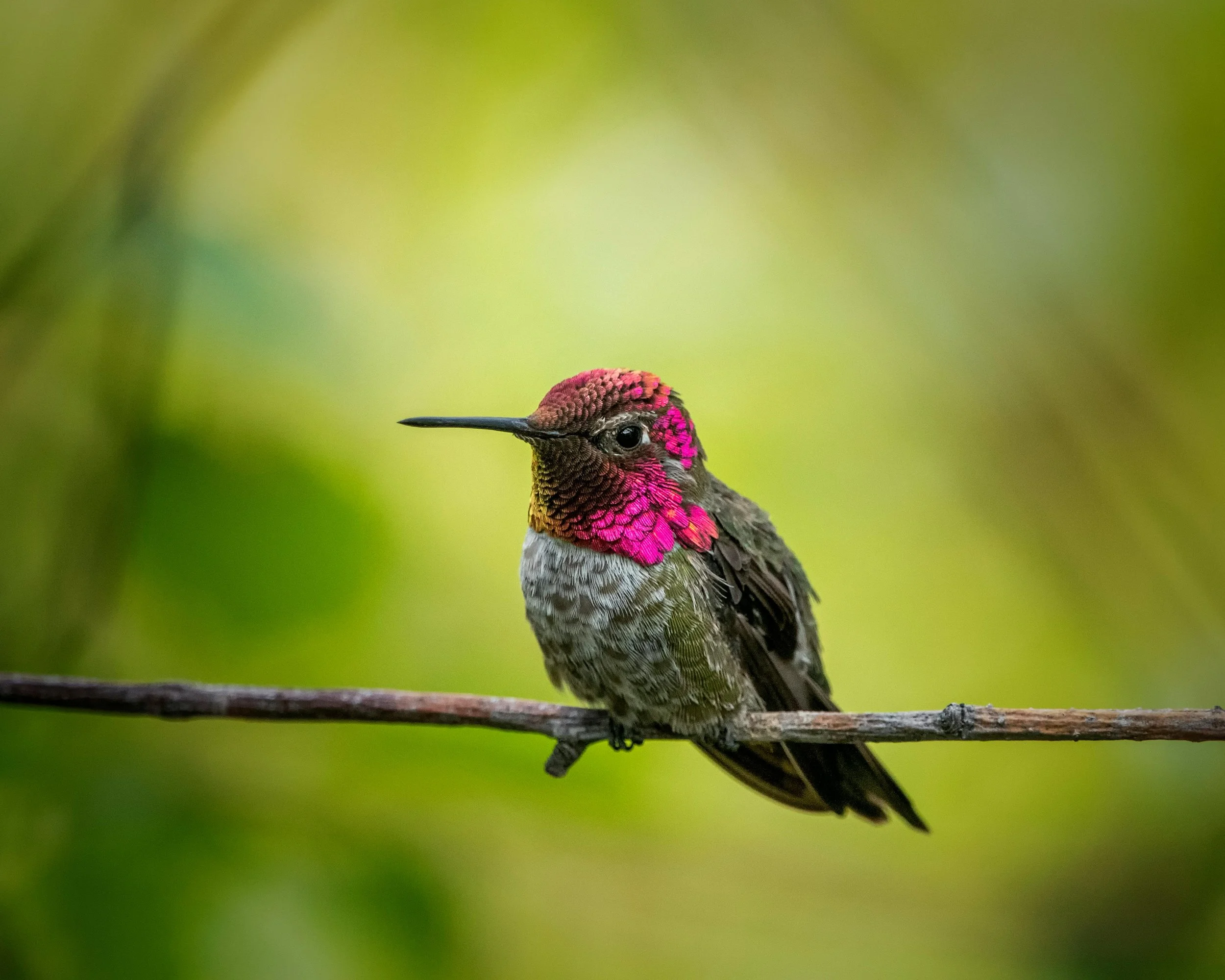
Anna's Hummingbird on a Branch
Anna's Hummingbirds visit feeders year round along the coast. These tiny birds need frequent feeding to fuel their incredibly fast metabolism. Males have brilliant rose colored throats that flash in sunlight. They're aggressive despite their small size, chasing other hummingbirds away from feeders. Set up a hummingbird feeder if you enjoy their aerial acrobatics (and if you want to read an interesting article about hummingbird behavior, click here).
American Crows don't typically visit feeders but they're hard to miss in Brookings. Large, all black, and loud, crows gather in groups and communicate constantly. They're among the most intelligent birds. Watching their problem solving and social behavior provides endless entertainment.
Varied Thrushes appear in winter months. They look like robins wearing orange and black Halloween costumes. A bold black stripe crosses their orange chest. They prefer to feed on the ground under cover. Varied Thrushes are shy compared to other feeder birds but their striking colors make any sighting special.
What You'll Notice Over Time
Birds follow patterns you'll start recognizing. Certain species arrive at your feeder first thing in the morning. Others show up mid afternoon. Some birds are bold while others wait nervously for the feeder to clear before approaching.
Weather affects bird behavior noticeably. Before storms, birds feed frantically, stocking up. During heavy rain, many hunker down and skip feeder visits. After storms pass, activity picks up as hungry birds emerge.
Individual birds have personalities. One chickadee approaches the feeder cautiously while another swoops in fearlessly. A particular jay might dominate while others wait their turn. Recognizing these individuals makes watching more personal.
Social dynamics play out constantly at feeders. Larger birds usually boss smaller ones. But smaller birds are quicker and often sneak in while bigger birds are distracted. Some species feed together peacefully. Others refuse to share space.
Simple Ways to Enhance Bird Watching
Keep binoculars near your window if holding them doesn't tire you. Even basic binoculars bring birds close enough to see incredible detail. The texture of feathers. The color of eyes. The way beaks are shaped for different foods. These vintage-looking opera glasses might be easier to hold than traditional binoculars.
Download a bird identification app on your phone or tablet. Apps like Merlin Bird ID let you identify birds by answering simple questions about size, color, and behavior. The app shows likely matches and plays bird songs so you can learn to identify species by sound as well as sight. It is free and developed by the Cornell Lab of Ornithology.
Keep a simple list of species you've seen. Mark the date when you spot something new. This gives you small goals and creates a record of what visits your feeder. Some people enjoy sketching birds they see. Others just make checkmarks on a list.
Put up multiple feeders if you have several windows. Different feeder types attract different birds. A suet feeder brings woodpeckers. A thistle feeder attracts goldfinches. A platform feeder accommodates ground feeding species that won't use hanging feeders.
Add a water source if possible. A simple bird bath near your window attracts birds that don't eat seeds. Water also draws birds year round, not just when feeders are full. In winter, change the water daily to prevent freezing.
When Birds Become Friends
Regular bird watching creates unexpected relationships. You start recognizing individual birds. You notice when certain ones don't show up. You worry about them during storms.
Many homebound patients report feeling less alone when birds visit regularly. The birds provide company without requiring anything. They don't need conversation or care. They just show up, live their lives, and share their world with you.
Birds mark time in gentle ways. Morning chickadees signal the start of day. Afternoon jays announce mid day. Evening sparrows settling into bushes mean the day is ending. These natural rhythms provide structure without pressure.
Watching birds gives you something to talk about with visitors. You can point out different species. Share what you've noticed about their behavior. Report exciting sightings like a new species or unusual activity. These conversations feel lighter than discussing symptoms or treatment.
Connecting Beyond Your Window
Birds migrate and move with seasons. The bird at your feeder might have started somewhere far north and will travel even farther south. It stopped at your window during its long journey. This connects you to places you can't visit and cycles larger than your illness.
Birds represent freedom and possibility. They go where they want. They fly. They move between earth and sky effortlessly. Watching this freedom provides vicarious joy even when your own movement is limited.
Baby birds appear in spring if you keep watching past February. Parents bring fledglings to feeders and teach them to eat. This next generation renews the cycle. Life continues and adapts and persists. Watching this unfold matters more than you might expect.
Starting Today
You don't need to wait for perfect conditions or ideal equipment. Put out a simple feeder today. Fill it with sunflower seeds. Then watch and see who shows up.
The birds outside your window live completely wild lives. They hunt, eat, court, argue, raise families, and survive storms. They do all of this whether you watch or not. But when you do watch, their lives become part of yours. Their small dramas entertain you. Their persistence inspires you. Their daily visits remind you that the world keeps turning with beauty and purpose.
Open your curtains. Look outside. The show is already happening. You just need to tune in.